CONTACT US:

469 Medical Drive Suite 200 Bountiful, Utah (801) 292-5812

Tuesday, April 5, 2016

Ten Things To Consider Before Purchasing Dental Insurance


Are you looking into purchasing a dental benefits/insurance plan? Here is a list of things to consider before you do. 

1. Will you be able to continue seeing your current dentist? 
If you have a dentist that you really like, you may want to look into an insurance plan that he or she participates with. If your dentist is not on that list, don't be afraid to ask why your dentist has chosen not to participate. They may have a very good reason. Don't let insurance companies fool you into thinking you can only see a dentist that is on their list. Several companies will help pay even if it is not with a participating doctor. 

2. Know what is covered in the plan you are researching. 
Many insurance companies do not cover certain procedures, especially when it comes to preventive treatment. Dental sealants and fluoride are not always covered. Both of these procedures could prevent future decay and save you money in the long run. 

3. Is the treatment you need determined by you and your dentist?
If you are having to choose dental treatment based on what your insurance plan will cover, you may not be receiving the treatment that is best for you. You and your dentist should be making the decision together on what treatment is ideal for your overall health. 

4. What type of dental care is covered?
Does the plan you are researching cover braces, bridges, crowns, or periodontal disease? What about major treatment such as; dentures, implants, or TMJ disorder? 

5. What is your coverage maximum?
Most dental plans cover on average a $1,000-$2,000 maximum per year. This small amount can be greatly diminished after one or two procedures depending on what type of treatment is needed. If you know you need more work than this amount allows, it may not be worth the premiums and remaining out of pocket expense to purchase a dental plan.

6. What if you need to see a specialist?
Some plans do not cover specialist visits leaving you with the entire cost out of your own pocket. 

7. Does the plan cover out of area emergencies?
Nothing is worse than having a toothache while you are trying to enjoy yourself on vacation. Does your dental insurance take care of these types of visits?

8. Does the insurance have a waiting period? 
If you are needing treatment immediately, you are likely going to have to wait 3 months for minor work such as fillings, and one year for major work like bridges and crowns. 

9. Does the plan have a pre-existing condition clause?
Some companies will not cover pre-existing conditions such as missing teeth. If you have a missing tooth that needs to be replaced with a bridge or an implant, many times insurance plans will not cover this treatment. 

10. Do you have an existing crown or bridge that needs to be replaced?
The majority of insurance plans will not pay for a bridge or crown that needs to be replaced if it has been under 5 years. Some companies won't help pay if it has been less than 7 years. 

It is important for you as a patient to consider all of these options before opting to purchase a dental insurance plan. 


Information for this post came from www.investopia.com and www.ada.org

Tuesday, March 29, 2016

BOTOX For Headaches and Jaw Pain


BOTOX For Headaches and Jaw Pain

Do you suffer from migraine headaches? Do you grind or clench your teeth? Well, we have a solution for you! BOTOX is a prescription medicine that is injected into muscles and used to prevent TMJ related pain, tension headaches, and migraine headaches. What some patients may not realize is their source of chronic headaches,or migraines, may come from tension in the mouth and jaw area. I commonly see this in patients who grind their teeth or constantly clench their jaw from stress. It is common that patients are not even aware that they are teeth grinders or hold tension in their jaw because it is subconscious behavior. A common symptom that people have is they will wake up in the morning with a sore jaw and a headache. This is usually due to nocturnal grinding which may occur because of excessive stress, syndromes such as obstructive sleep apnea, or even occlusal interference (a bad bite). BOTOX injections can be a great solution for TMJ related pain and headaches. 


Before the Procedure
Clean skin is best before having BOTOX injections. We recommend that women remove their makeup prior to treatment. The doctor will assess your specific needs and  together you decide the best course of treatment.


During the Procedure
The doctor will use a very thin needle to inject BOTOX into the skin or muscles. The amount of BOTOX and number of injections depends on the area being treated and the severity of your case. 

After the Procedure
Women can apply makeup after the procedure is complete and resume normal activities. A headache for a couple of days after treatment is normal and should subside. Be careful not to rub or massage the treated area for approximately four hours and do not lie down for approximately six hours after treatment. This can cause the BOTOX to migrate to other areas. 

Check out Dr. Davis on "Check Your Health" with Shauna Lake. 


For more information on BOTOX treatments or to make an appointment, contact Davis Dental at: 801-292-5812

Information for this post was found at davisdentalutah.com, mayoclinic.org, and video is courtesy of KUTV 2 Utah and YouTube.

Tuesday, March 22, 2016

Opalescence Go is Now Available!!!

If you are looking for an easy solution to teeth whitening look no further! Our office is now offering Opalescence Go.  Opalescence Go is a professional whitening gel delivered in prefilled, disposable trays.  That means no added cost of custom trays, no gooey impressions, and no lab wait time.

Benefits of using Opalescence Go:
  • comfortably molds to any patients smile
  • molar to molar coverage
  • 15% hydrogen peroxide formula that only needs to be worn for 15 to 20 minutes
  • contains potassium nitrate that has been shown to help with sensitivity
  • contains fluoride which reduces dental decay
  • formulated with 20% water to keep teeth hydrated during whitening process unlike many other whitening products on the market that dehydrate teeth
Wondering how whitening products work?

The whitening process is possible due to the ability of the carbamide peroxide and hydrogen peroxide to freely pass through enamel and dentin to permeate to all parts of the tooth. These peroxides break down into oxygen radicals, which migrate between the enamel prisms, breaking down any colored molecules that result in tooth discoloration. The structure of the tooth is not altered; the internal tooth color is simply made lighter. Whitening agents break down into tiny molecules and move in all directions, so even if the whole tooth is not covered with gel, the entire tooth is whitened.


All information from this post was obtained from www.ultradent.com.

For more information on this product or others like this, contact our office at (801)292-5812

Thursday, October 9, 2014

Dr. Davis' Latest Dental Implant Case

Achieving Optimal Esthetics with Dental Implants 


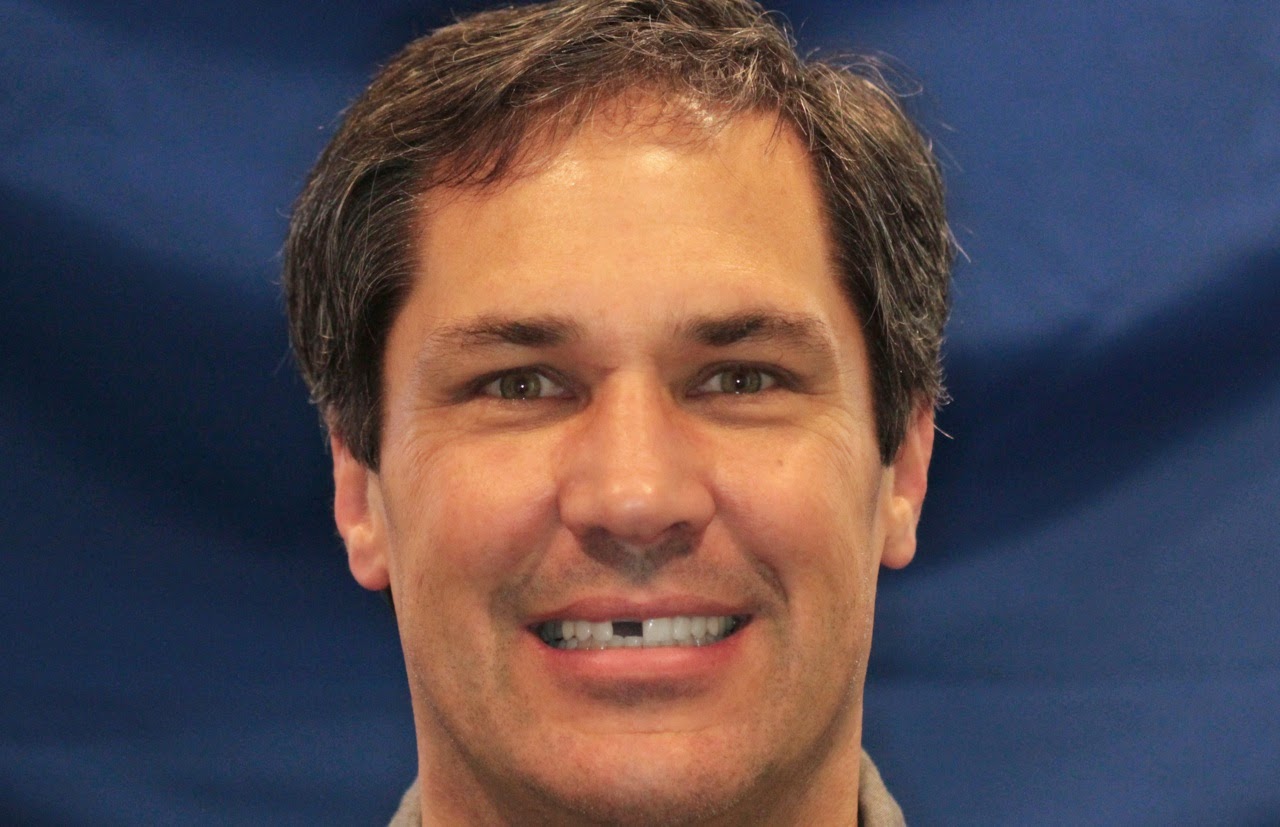
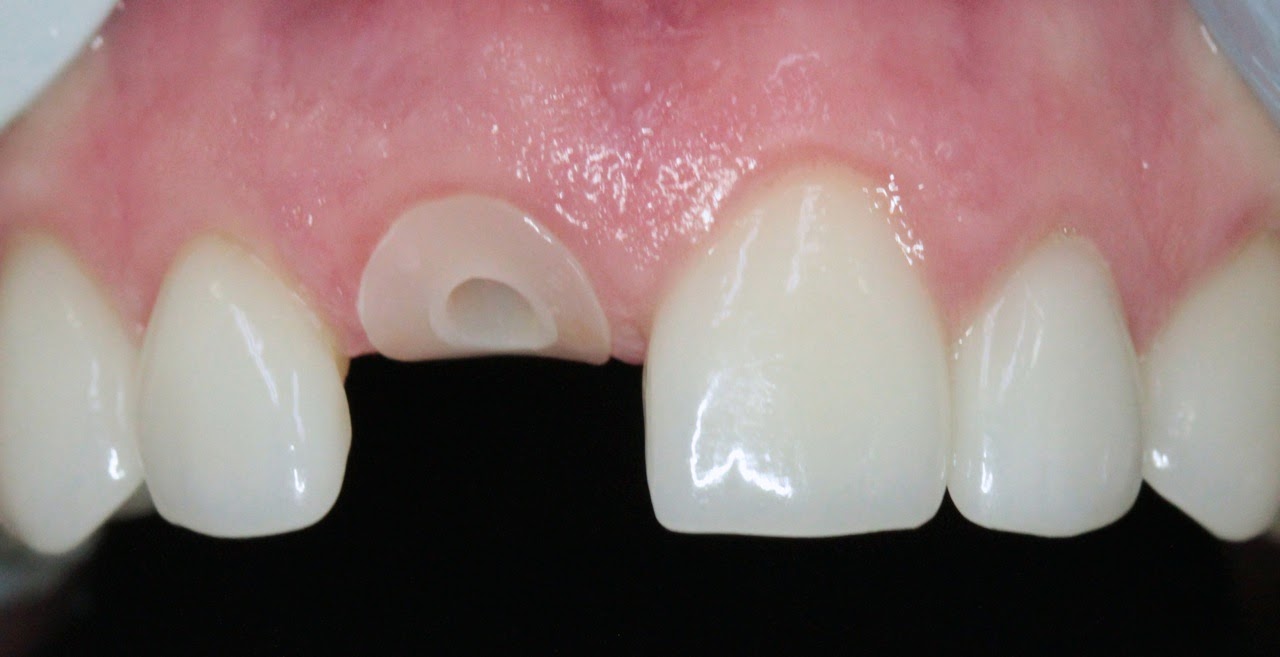
Many people don't realize that an esthetic smile not only requires beautiful, symmetrical teeth, but also requires that the gum tissue contours be symmetrical and to the correct proportions. One of the most challenging procedures in implant dentistry is to achieve ideal gum tissue contours in the esthetic zone, otherwise known as the upper front teeth, or the teeth you see when you smile. In the above case, we were able to achieve these ideal contours perfectly, making tooth loss virtually undetectable. This patient broke off his front tooth due to trauma leaving it unrestorable. The remaining root was extracted and an implant was placed immediately into the socket. An impression was made during the time of surgery and a customized healing cuff (seen in the above photo) was fabricated and screwed into the implant that same day. The purpose of the custom healing cuff was to preserve the original gum tissue contours. Without it, the gum tissue would collapse in toward the socket changing the ideal contours and compromising a perfect esthetic outcome. After the implant had healed and fully integrated to the bone, the final restoration (crown) was fabricated, resulting in a beautiful smile. No one will ever know that this patient lost his front tooth.

At Davis Dental, we pride ourselves in providing patients with the best dentistry available. With every case, we strive for the most perfect outcome achievable. If you are in need of dental implants or other dental work and you are impressed with the work we have presented to you, please contact us at (801) 292-5812, or visit our websites:

www.davisdentalutah.com
www.prettauimplantutah.com

Thursday, April 24, 2014

Achieving Accreditation from the American Academy of Cosmetic Dentistry

American Academy of Cosmetic Dentistry Conference in Orlando,  Florida 2014

About American Academy of Cosmetic Dentistry 

The AACD Mission
The American Academy of Cosmetic Dentistry® (AACD) is dedicated to advancing excellence in the art and science of comprehensive cosmetic dentistry and encouraging the highest standards of ethical conduct and responsible patient care. The AACD fulfills its mission by: offering superior educational opportunities; promoting and supporting a respected Accreditation credential; serving as a user-friendly and inviting forum for the creative exchange of knowledge and ideas; and providing accurate and useful information to the public and the profession.

Lectures Dr. Davis will attend include the latest advances in cosmetic dentistry including soft tissue aesthetics for cosmetic implants.

Becoming an Accredited Member of the AACD

By attending these courses and conferences Dr. Davis is working towards AACD accreditation. 

What does AACD accreditation mean? 
With the formation of the Accreditation and Fellowship Programs, the AACD began offering the most stringent and respected postgraduate certification in cosmetic dentistry to both dentists and laboratory technicians. Accreditation, Journal of Cosmetic Dentistry, and AACD's cutting-edge Annual Scientific Session have solidified the Academy's position as the leading cosmetic dental organization in the world. AACD members are recognized as professionals dedicated to constant improvement of their skills and knowledge, and to making the life-changing benefits of cosmetic dentistry available to more people every year. 

What is Cosmetic Dentistry?
Cosmetic dentistry is comprehensive oral care that combines art and science to optimally improve dental health, aesthetics, and function.

Excellence through Education
The American Academy of Cosmetic Dentistry's fundamental principle is to promote education. The Academy holds annual scientific sessions throughout North America. The focus of the annual conference is to allow practitioners to exchange new ideas and receive meaningful, interdisciplinary, and actionable information on the latest in clinical procedures, materials and methods, cosmetic practice development, and self-enrichment. In addition, dentists may earn AGD continuing education credits, as well as credit towards achieving Accredited status in the Academy.

One of the principle efforts of the AACD is the education, promotion, and acceptance of cosmetic dentistry practices by the general public. The AACD participates in international public relations efforts to raise the public's perception and understanding of cosmetic dentistry.

http://aacd.com/about


Visit our website: